
Innovative Methods in Machine Learning
Five Hamburg research institutions pool their AI research in the European ELLIS network
30.10.2026
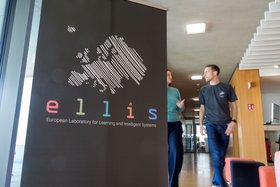
Five Hamburg research institutions are joining forces to establish the ELLIS Unit Hamburg. Their goal is to strengthen research in machine learning through collaboration, expand international networks and support the next generation of researchers. On 29 October 2026, the new unit will become part of the European ELLIS Network of Excellence. The participating institutions are Universität Hamburg (UHH), Hamburg University of Technology (TUHH), Deutsches Elektronen-Synchrotron DESY, University Medical Center Hamburg-Eppendorf (UKE) and Helmut Schmidt University/University of the Federal Armed Forces Hamburg (HSU/UniBw H).
ELLIS stands for “European Laboratory for Learning and Intelligent Systems”. Founded in 2018, this pan-European network of excellence brings together leading institutions in the field of artificial intelligence (AI), with a particular focus on advancing fundamental research in machine learning. With Hamburg and the new locations Côte d’Azur, Innsbruck, Ireland and Norway, ELLIS is expanding to a total of 49 units.
The ELLIS Unit Hamburg brings together the expertise of all five institutions. Its research profile encompasses five areas: foundations of machine learning, cognitive and cyber-physical systems, climate research, physics and biomedical sciences.
Prof. Dr. Hauke Heekeren, President of Universität Hamburg:
“At Universität Hamburg, researchers apply machine learning methods in fields ranging from climate research and physics to neuroscience. Together with four partners in Hamburg, we will become part of one of Europe's leading AI research networks through the ELLIS Unit. In the future, our researchers – particularly doctoral candidates and postdoctoral researchers – will be able to collaborate even more closely with colleagues across Europe.”
Prof. Dr. Nihat Ay, Director and Principal Investigator of the ELLIS Unit Hamburg and Head of the Institute for Data Science Foundations at Hamburg University of Technology:
“The importance of machine learning for engineering sciences is continuously increasing. Traditional approaches based on detailed mechanistic models and digital twins are increasingly being supplemented or, in certain application areas, replaced by machine learning methods. These often enable more efficient solutions that make better use of available resources. The fundamental research required for this is a key focus of TUHH's ‘Machine Learning in Engineering’ initiative. The ELLIS Unit Hamburg offers excellent opportunities to further expand these research activities and strengthen networking and collaboration – both with the partners of the ELLIS Unit Hamburg and with other ELLIS units across Europe.”
Prof. Dr. Beate Heinemann, Chair of the DESY Directorate:
“In Hamburg, machine learning and science come together in a particularly powerful way. DESY's research infrastructures and the international experiments in which we participate generate enormous volumes of highly complex data. Analysing this data is now virtually inconceivable without intelligent algorithms. AI helps us analyse data more quickly and gain new insights. It also makes accelerator operations more efficient, thereby increasing scientific productivity. The ELLIS Unit Hamburg will further strengthen the links between our existing expertise and partners in Hamburg and throughout Europe. At the same time, it will make Hamburg an even more attractive destination for young talent from around the world.”
Prof. Dr. Stefano Panzeri, Director and Principal Investigator of the ELLIS Unit Hamburg and Head of the Institute of Neural Information Processing at UKE:
“Machine learning offers enormous opportunities for medical research and healthcare. It helps us better understand complex data, gain new insights into the brain and its disorders, and improve diagnostics and treatment. To achieve this, AI research, biomedical sciences and clinical practice must work closely together. The ELLIS Unit Hamburg creates the conditions needed to jointly develop innovative AI solutions and make them available more quickly for the benefit of human health.”
Prof. Dr. Klaus Beckmann, President of Helmut Schmidt University/University of the Federal Armed Forces Hamburg:
“Artificial intelligence is changing not only science but also the way we live, work and make decisions. Its development must therefore not be viewed solely in terms of technological performance. We need to understand how intelligent systems arrive at their results, where their limitations lie and how they can be used responsibly for the benefit of society. This requires fundamental research and exchange across disciplines and institutions. With the ELLIS Unit Hamburg, we are bringing this collaboration together under a clear mandate: we want to empower young researchers to pursue their own research questions, build international networks and critically shape and advance the development of intelligent systems.”
Combining Expertise for International Research
The scientific leadership will be shared by Prof. Dr. Nihat Ay (TUHH) and Prof. Dr. Stefano Panzeri (UKE). Dr. Katrin Schöning-Stierand from the Hub of Computing and Data Science (HCDS/UHH) will coordinate the unit.
The scientific team comprises 13 Principal Investigators from the five partner institutions. At Universität Hamburg, research is conducted by Prof. Dr. Johanna Baehr, Prof. Dr. Chris Biemann, Prof. Dr. Gregor Kasieczka, Prof. Dr. Anne Lauscher, Prof. Dr. Nicolas Schuck and Prof. Dr. Frank Steinicke. Prof. Dr. Nihat Ay and Prof. Dr. Annika Eichler, who is also affiliated with DESY, represent Hamburg University of Technology. DESY is represented by Prof. Dr. Martin Burger. Prof. Dr. Stefano Panzeri, Prof. Dr. Cristina Becchio and Prof. Dr. Stefan Bonn are based at UKE. Prof. Dr. Oliver Niggemann represents Helmut Schmidt University/University of the Federal Armed Forces Hamburg.
As part of the ELLIS network, researchers will gain access to international collaborations, thematic research programmes and funding opportunities for doctoral candidates and postdoctoral researchers.
The Hamburg unit builds on the collaboration established through the “Computing and Data Science” action area of “PIER PLUS”. It aims to deepen cooperation across the Hamburg metropolitan region, expand exchanges with other ELLIS locations and European research programmes, and make Hamburg a more attractive destination for international research talent.
Knowledge transfer to the wider public is also part of the initiative. The “ligeti zentrum” and the Körber Foundation will support the cultural communication of research findings. Planned activities include an ELLIS lecture series and events designed to make machine learning accessible through artistic approaches.
Media Contact
Alexander Lemonakis Universität Hamburg
Press Spokesperson to the President
Phone: +49 151 19141646
Email: alexander.lemonakis@uni-hamburg.de
TUHH - Public Relations Office
Elke Schulze
E-Mail: elke.schulze@tuhh.de
Phone: +49 30601 4040


