
Launch of the Network for Oceanic Sensing and Integrated Science
EU-funded Doctoral Project Aims to Transform Marine Research
22.09.2026
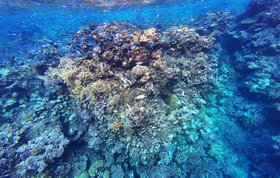
This project has set itself an ambitious goal: to modernize more than 70 percent of the Earth – namely, the part covered by oceans. In the field of marine research, it addresses questions such as how undersea earthquakes can be predicted in time, how coastlines can be protected more sustainably, and how mussel beds can be preserved more effectively. The primary goal of the Network for Oceanic Sensing and Integrated Science (NOESIS) is to fundamentally modernize the way the world’s oceans are monitored, understood, and managed. NOESIS is a highly competitive doctoral network funded through the prestigious Marie Skłodowska-Curie Actions (MSCA) under the EU’s Horizon Europe research and innovation program. The project will begin in October 2026.
The project is led by the marine research unit at the University of Helsinki. Hamburg University of Technology (TUHH) is represented by the Institute of Networked Cyber-Physical Systems (NCPS), headed by Prof. Olaf Landsiedel, and the Institute of Autonomous Cyber-Physical Systems (ACPS), headed by Prof. Bernd-Christian Renner. While Prof. Landsiedel contributes expertise in AI and computer science, Prof. Renner brings his expertise in underwater communication to the NOESIS project.
Two of the doctoral positions will be based at TUHH, with each professor supervising one position. Given their close physical proximity and overlapping research interests, the two positions are designed to work in close collaboration. One doctoral researcher will investigate distributed embedded AI for real-time multisensor analysis underwater. The other will focus on low-power underwater communication, investigating methods for integrated acoustic sensing and communication using external wake-up mechanisms (AI-based event detection). “NOESIS is an ambitious European initiative that will help transform ocean observation from passive data collection into autonomous, real-time ocean intelligence,” says Prof. Landsiedel.
Training a new generation of researchers
European marine ecosystem research currently faces a challenge: there is a shortage of scientists who both understand the ecological context of the oceans and have the digital skills needed to work with vast, multimodal datasets. NOESIS aims to close this gap by training a new generation of research architects. They will be equipped to jointly design the entire observation chain – from the energy budget of a deep-sea sensor to the policy implications of biodiversity data.
To achieve this, NOESIS replaces the traditional linear research model with an integrated discovery cycle structured around three functional clusters.
Technological Foundation: This cluster develops resource-efficient embedded hardware solutions, including underwater micro data centers and environmentally friendly acoustic technologies. These are designed to overcome the physical limitations imposed by energy supply and bandwidth in the deep sea.
Methodological Interface: This cluster develops physics-informed AI and domain-generalization algorithms to bridge the gap between raw sensor data and meaningful environmental variables. In particular, it aims to address the challenge of transferring models across different application domains.
Scientific Frontier: This cluster uses the tools developed within the project to create predictive risk models for biodiversity. Data from environmental DNA, acoustics, and optical methods will be integrated to make dynamic ocean management practically feasible.
Toward the “digital ocean”
Through a distinctive dual-track strategy for research placements (secondments), all doctoral researchers will develop in-depth expertise in their respective disciplines while also testing their methods and technologies in a different scientific environment – for example, by having engineers deploy their hardware at biological research stations.
Through its interdisciplinary approach, NOESIS combines technological innovation with extensive expertise and infrastructure in ocean observation. In doing so, the project enables a shift from passive, retrospective collection of marine data toward autonomous, real-time ocean observation and analysis (“Ocean Intelligence”), thereby strengthening Europe’s leading role in the field of the digital ocean.
About the project
The consortium will receive €4.5 million in funding. A total of 15 doctoral positions (PhD positions) will be advertised and filled across Europe. Overall scientific coordination is led by the University of Helsinki. The main partners are the University of Madeira, the Norwegian University of Science and Technology (NTNU), Hamburg University of Technology (TUHH), the GEOMAR Helmholtz Centre for Ocean Research Kiel, the University of Thessaly (UTH), the University of Tartu, the Polytechnic University of Catalonia (UPC), ENSTA Paris, and Institut Polytechnique de Paris.
TUHH - Public Relations Office
Elke Schulze
E-Mail: elke.schulze@tuhh.de
Phone: +49 30601 4040


